
Interview
Silo Season 3 Exclusive Interview: Screenwriter Jeffery Wang on Episode 9

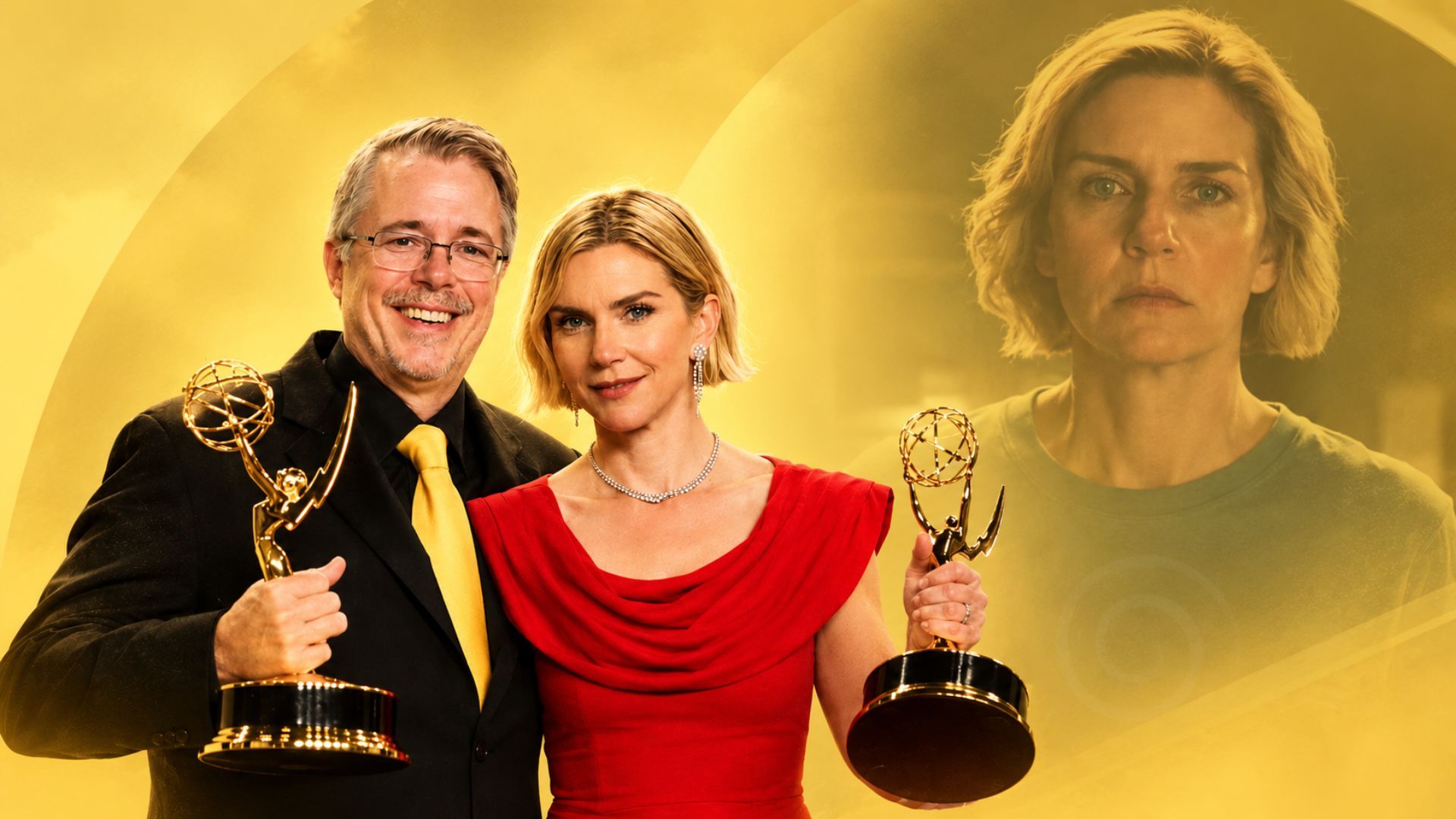
As a long-time reader of Hugh Howey’s original Silo series, watching this universe expand on television has been a masterclass in adaptation choices. This season reached a creative peak with Episode 9—the second highest-rated episode in the entire series—written by Jeffery Wang, who masterfully delivered the season's most devastating climax.
As a fan, viewer, and critic who tracks this show scene-by-scene, I didn't want to ask standard, surface-level press questions. I wanted to dive straight into the literal script architecture, character fates, and the structural deviations between the page and the screen.
When I delivered these questions to screenwriter Jeffery Wang, his personal response highlighted the exact depth we aim for at SciFi Spiral. Jeff noted:
"Thank you for watching the show and asking these really insightful questions! It was fun to revisit my memories (and early drafts) to answer these.
There are a few questions I can’t get into without spoiling Season 4 so perhaps I can tell you more next year."
Because the questions touched so closely on the show's future, Jeffery held back a few answers to protect the upcoming season plotlines. What follows below is an exclusive, inside look at the creative execution behind Episode 9, "Farewell," of Silo Season 3.
The Interview
Book readers know Bernard dies at the end of the first novel, Wool, and never makes it this far. Why did the writers decide to keep him alive for Season 3, and what does his suitless death at the dead tree ultimately mean for his character?
We always felt there was more to Bernard’s story in the show. When we started Season 3, we didn’t exactly know what that would look like but we all kept it in the back of our minds as we built out the season. When we arrived at the question of, “Who’s been helping Juliette?” Bernard was the obvious answer. We were all excited because it gave him a full character arc from being a tool of the system to one of the people trying to bring it down.
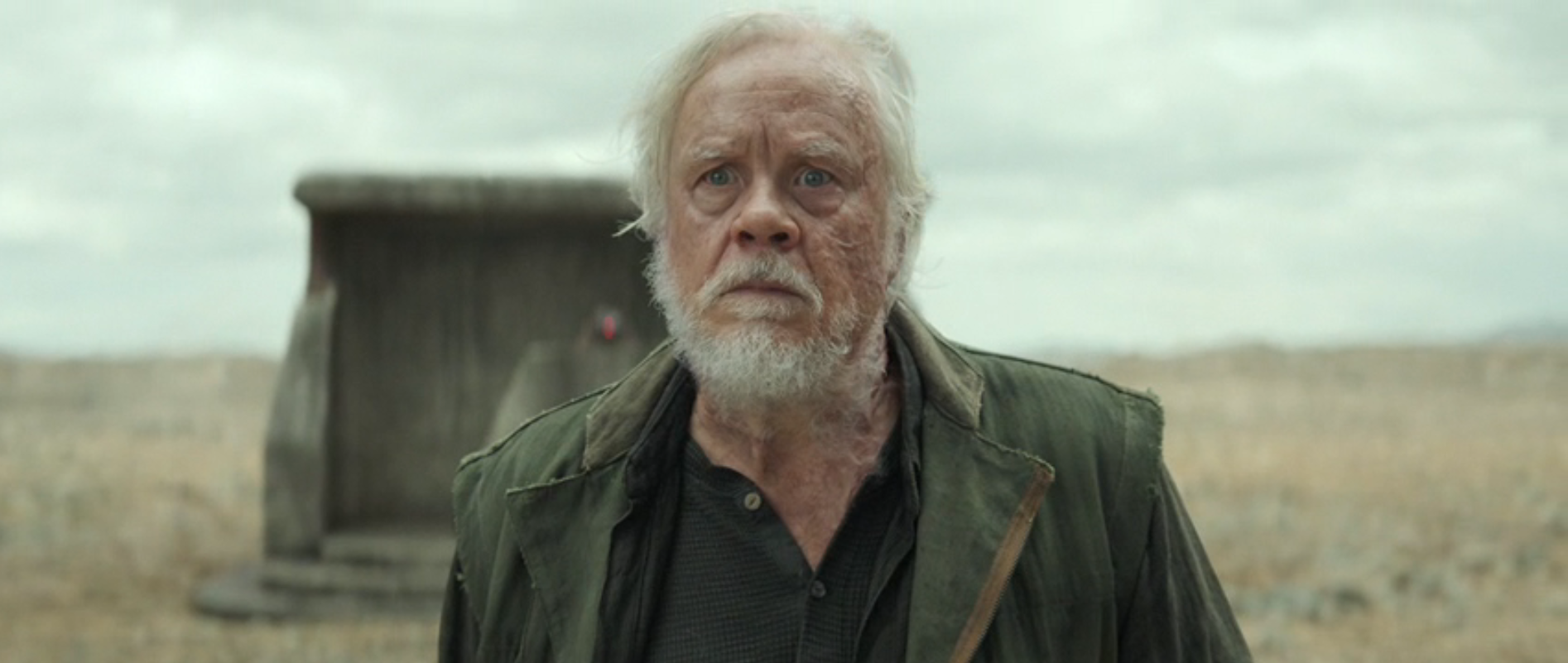
Part of why he sacrifices himself is because he's in excruciating pain from the fire and is haunted by what he did when he was in power. He caused a lot of suffering just because the Algorithm ordered him to. One of his victims was Mary Meadows, the only person he’s ever loved, and he denied her fundamental wish to go outside. He might not have known it at the time but that broke something within him. With his own death, he gets to fulfill the human need to be outside for both of them. In the original draft of the script, his last words at the tree were, “My name is Bernard Holland. Her name was Mary Meadows.”
Camille is the one who denies him the suit but it’s what he would have asked for anyway. He knows the helmet screen is a lie and the suit wouldn’t save him. Without them, he gets to feel the wind on his face and see the world with his own eyes. He’s not going out to clean but to find a resting place. It’s also a final middle finger to Silo 1 that he won’t play its charade anymore.
His death scene was originally going to happen during a rainstorm for story reasons, and I was happy that it would be a nice homage to “Shawshank.” During rewrites, the storm went down to a drizzle… then a light mist… until we arrived at what it is now. I think this final version is great, especially Amber’s addition of having sunlight on his face as he breathes his last.
During the intense confrontation in the Vault, Bernard tries to bargain with the Algorithm by pointing out everything he has done to serve the system, only to be coldly rejected. Knowing Camille is standing right there watching her predecessor be discarded, was Bernard intentionally using his own downfall to get her to change her side to the resistance? Is this confrontation meant to be the official turning point where Camille's blind loyalty fractures?
Yes, that is part of the calculation. Bernard knows his request is going to be denied and Camille will be standing next to him when it happens. He’s a strategist so his conversation with the Algorithm is manifold: a) get the Algorithm to betray a “human” quality to confirm his hypothesis, b) get sent out to clean which will create a distraction for Juliette’s friends, and c) let Camille see that being an effective tool of the system doesn’t grant immunity. The Heads of IT are in a very toxic, unidirectional relationship with the Algorithm: it demands blind loyalty from them, while the slightest infraction is tantamount to a complete betrayal. That’s a feature of all authoritarian personalities and systems.
Bernard knows Camille is still too immersed with the Algorithm to break from it right then. When Bernard tells her it’s just a person on the other side, he’s giving her encouragement to fight back. He knows firsthand how hard her job is, and there may be cracks in her resolve. He’s adding a little more pressure to it and Juliette asking those essential questions later in the episode is when the fracture finally happens.
During the Before Times, Per Stensen (Colin Hanks) casually plays "Chopsticks" on the piano. Fans immediately noticed the connection to his father Tom Hanks' famous scene in "Big", but there is a lot of debate online about whether this was a deliberate script choice or just a coincidence. Can you clarify if this easter egg was written directly into the screenplay, and what it was meant to say about Per's mindset in that moment?
It was Colin’s idea to tinker with the piano as a way to show how bored he is with Thurman’s speech. I was on set with him but we didn’t discuss the specifics so I imagine he was referencing “Big” with that. “Chopsticks” also very fortunately happens to be in the public domain.
You wrote that discussion-sparking scene where Dr. Victor tells Daniel that an AI wrote the Pact, which is a deviation from the books. What was your goal in writing that line, and what did you want it to reflect?
Graham came up with The Pact being written by AI. When he suggested that, it seemed farfetched to me. This would have been early 2024 and I was not especially well-versed on what AI could do. I put it in because, well, he's the boss, and you can’t really go wrong trusting his instincts. In the two-and-a-half years since that line was written, AI has become a ubiquitous topic for even troglodytes like myself, and this detail seems completely plausible to most of us now. Still, I was surprised by how much viewers responded to that, and it just proves once again that Graham is always right.
The idea of Per Stensen being the world’s first trillionaire also seemed humorously absurd. Elon Musk was "only" a quarter-trillionaire during the writers room so Stensen’s wealth felt like an indicator of our story being a bit further ahead in time. Like the AI reference though, the real world has caught up in disturbing ways to what we intended as speculative fiction. Or maybe Graham foresaw this too!
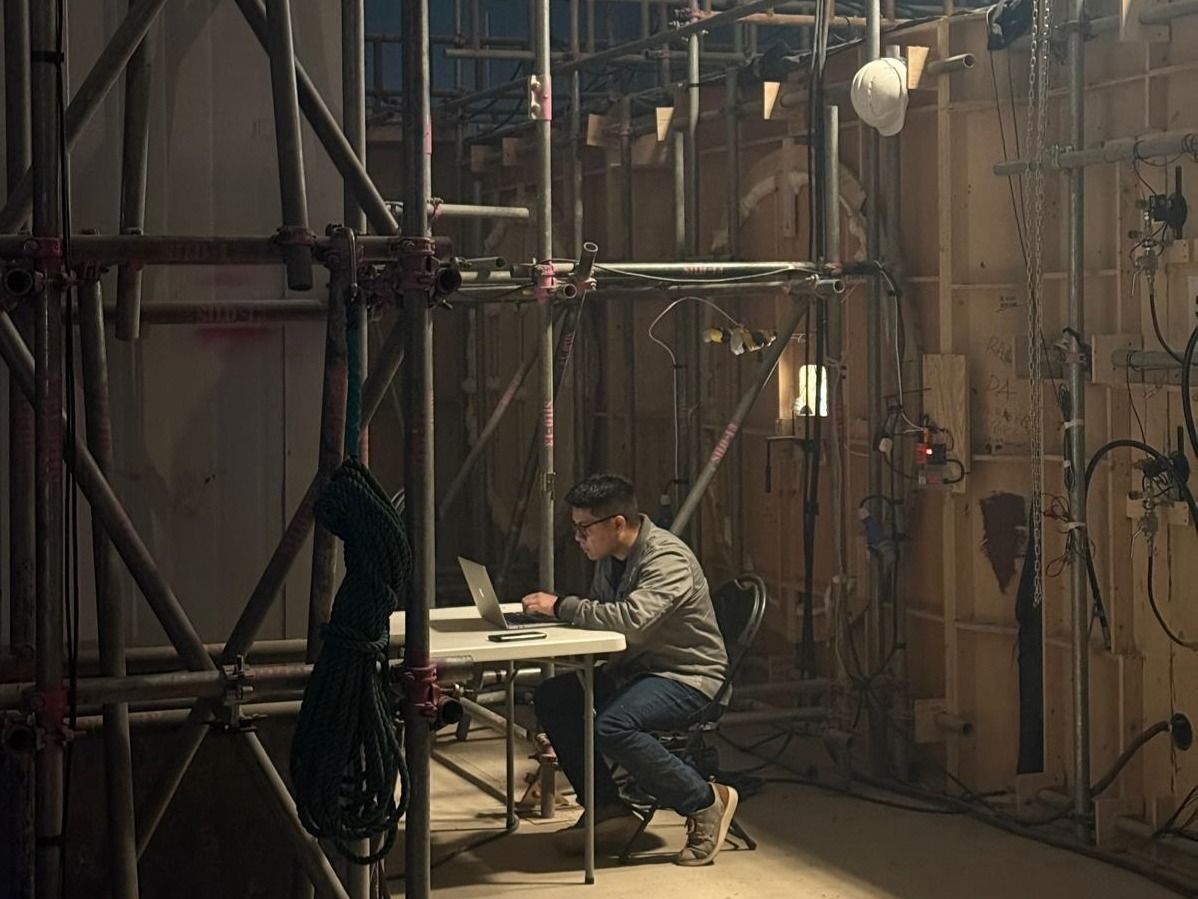
We are incredibly grateful to Jeffery Wang for taking the time to share these exclusive behind-the-scenes insights about Silo with our readers.
 Comment as a Member

![The Tragedy of Silo 17: A False Victory [Explained]](https://cdn.sanity.io/images/cxjt2s84/production/72ad21ba1dc7dab1520b1337592e2899409b4725-1920x1080.png)